Cash pickup
Cash can be picked up at our offices in 25 Russian cities.
Availability is confirmed in the request
Heading to Fiji but Russian bank cards don't work abroad and you need Fijian dollars? Don't count on the Mir card on the islands as your primary option. With ATM24, exchange rubles, dollars or USDT for FJD: pick up cash at our Russia offices before your flight, and in Fiji receive money via bank transfer to a local bank. Rate and final amount confirmed before payment - our manager will be in touch after you submit your request.
Rates come from the calculator at page-load time. Trends use market history as of 20 September 2026.
| Currency | Rate for 1 | 24h change | Trend |
|---|---|---|---|
| RUBRussian ruble | 0.02334FJD | 0.09% | |
| USDUS dollar | 2.09FJD | 0.04% | |
| EUREuro | 2.37FJD | 0.01% | |
| USDTTether | 2.09FJD | 0.1% |
Available methods depend on the selected direction and amount.
Cash can be picked up at our offices in 25 Russian cities.
Availability is confirmed in the request
Cash pickup in FJD at an ATM24 office; availability for Fiji is confirmed in the request.
09:00–21:00
A bank transfer to a local bank is processed by request: terms and available method for your amount confirmed in your request.
A calculation and request for the selected pair; available methods depend on the direction.
Fill in the calculator data. Choose the currency and a convenient way to receive funds.
Enter your contact details, click “Start transfer”, and wait for an operator response.
After confirmation and payment, we send money to Fiji using the selected method.
A short practical guide for a first visit.
The Mir card in Fiji is not suitable as a primary payment or FJD withdrawal method - on the islands the choice of banks and ATMs is often limited.
Visa and Mastercard issued by Russian banks don't work abroad, so it's best to buy Fijian dollars (FJD) in advance and keep a small reserve for the first few days. With ATM24, exchanging rubles, dollars or USDT for FJD uses a rate confirmed before payment: submit a request in the calculator, specify the amount and method, the manager quotes the rate - then you pay.
Cash can be picked up at our offices in 25 Russian cities - convenient before your flight. A bank transfer to a local bank is processed by request: terms and available method for your amount confirmed in your request.
If the amount is under 30,000 rubles, a fee applies. Before payment, check the calculator for the exact FJD amount based on your chosen amount and method.
Cities listed on the page: Suva, Nasinu, Lautoka, Nadi and Labasa. Available method for your specific city and amount will be confirmed in your request.
 Popular
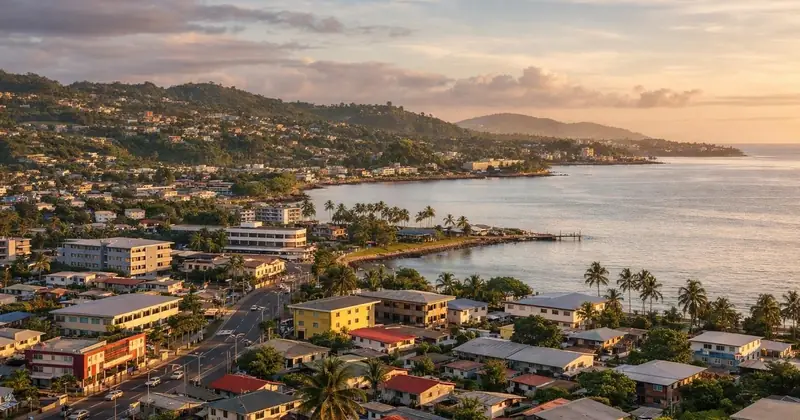 Popular
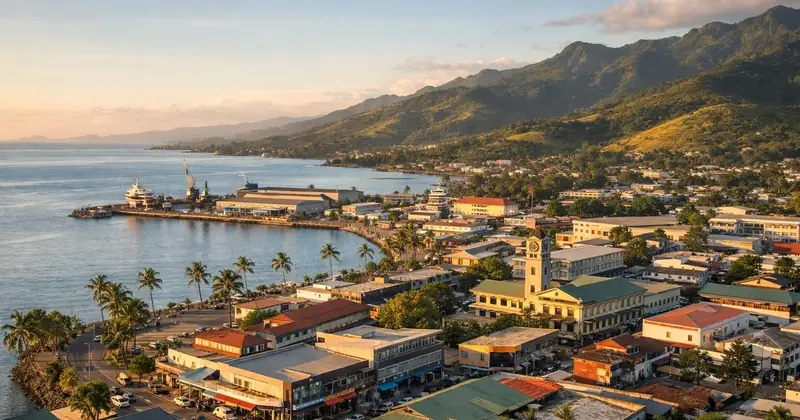 Popular
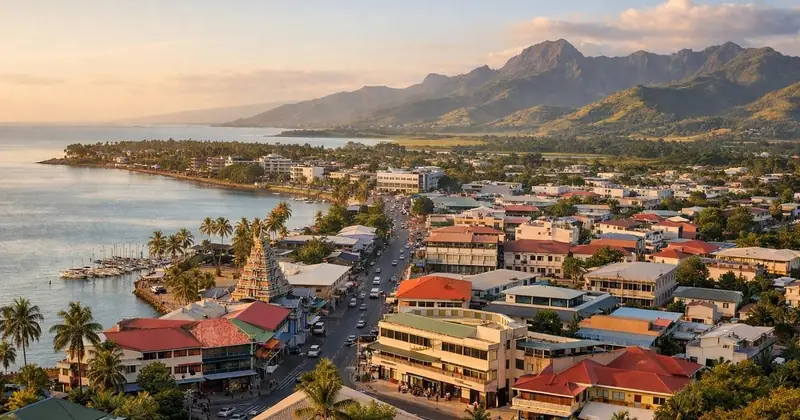
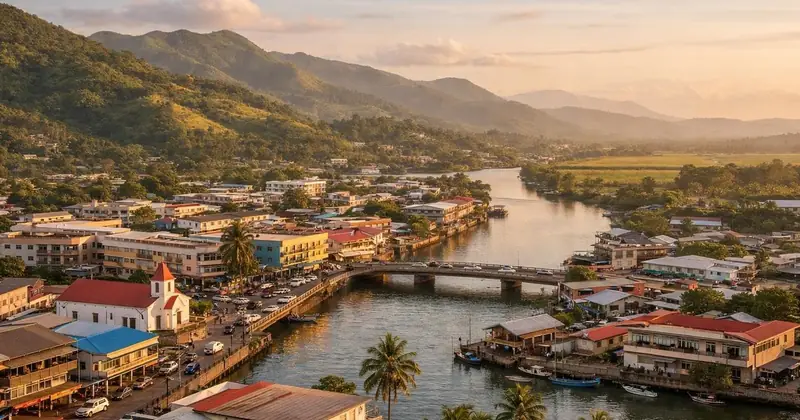
Cash payout points with addresses and opening hours
Fiji · Listed locations: 10
Open the map to see the locations.
Open Google MapsWaimanu Road, Samabula
Mon-Fri 08:00 - 17:00; Sat 08:00 - 13:00; Sun Closed
Rups Mega, Kings Road, NAKASI, Suva
Mon-Sun 08:00 - 21:00
16/19 Vinod Patel Building, YASAWA STREET, Lautoka
Mon-Fri 08:00 - 17:00; Sat 08:00 - 13:00; Sun Closed
Jetpoint Building, MARTINTAR, Nadi
Mon-Sun 07:30 - 17:30
Nasekula Road, Labasa
Mon-Fri 07:30 - 18:30; Sat 07:30 - 17:00; Sun Closed
66 MH HYPERMARKET P O BOX, LAUTOKA
Mon 07:00 - 22:00; Tue 07:00 - 23:59; Wed-Sun 07:00 - 22:00
NASEAKULA ROAD, LABASA, MACUATA
Mon-Sun 08:00 - 20:00
123 RATU MARA RD, SAMABULA, SUVA
Mon-Sun 08:00 - 20:00
Waimanu Road, SUVA
Mon-Sat 08:00 - 20:00; Sun 08:00 - 17:00
Directory data as of 2026-08-26
 ANZ Fiji
 Westpac Fiji
 Bank of Baroda Fiji
 BSP Financial Group Fiji
 HFC Bank Fiji
Real stories from real people
I urgently needed baht, it was already about midnight local time. I turned to this company, manager Emil helped me complete the transaction despite the fact that the deal time was outside the company’s working hours. Very grateful to him
Read full reviewManager Anna worked with me. Everything was prompt and as agreed.
Read full reviewfast, convenient, manager Ekaterina explained everything, told me what and how, told me where the nearest ATM to the hotel is, the instructions are simple
Read full reviewWell done, guys. Everything is prompt and reliable. You can use it!!!
Read full reviewEverything went fast and convenient, through the ATM. I was afraid of a scam, but everything is honest. Thanks operator Ekaterina
Read full reviewThey delivered currency to the hotel promptly (30 minutes), everything very fast and high-quality Personal manager - Alisa. This service really helped me a lot
Read full reviewWhat we guarantee on every deal in Fiji
The final payout amount in FJD is known before payment and does not change.
We confirm the rate and the payout amount before payment — they do not change afterwards.
Cash, courier or bank account — at the agreed payout point.
We accept from Russia and pay out in the local currency, including USDT — no Mir card required.
No Mir card is required for this.
Pick a country and you get its rate, its cities and its payout methods.
Country not found
Yes, with ATM24 you can exchange rubles for Fijian dollars: cash is convenient to pick up at our Russia office before your flight, and in Fiji you can receive money via bank transfer to a local bank. Rate and final FJD amount confirmed before payment.
The Mir card in Fiji is not suitable as a primary payment or FJD withdrawal method - on the islands the choice of banks and ATMs is limited. It's best to prepare FJD cash in advance through ATM24.
The Fijian dollar (FJD) is used in Fiji. Rubles, dollars or USDT can be exchanged for FJD through ATM24, with the final amount confirmed in your request before payment.
We don't quote a fixed number in the text - rates change throughout the day. For reference, check the calculator: 100 USD -> FJD: 209.22 FJD.
In Fiji you receive money via bank transfer to a local bank, and cash can be picked up at our Russia office before your flight. Available method for your amount will be confirmed in your request.
Did not find an answer?
Contact support