Cash pickup
Cash pickup at an agreed payout point.
Availability is confirmed in the request
Traveling to Denmark and your Russian bank cards don't work abroad - need Danish krone? Denmark uses DKK (not euros), and Mir card is not a reliable option there. With ATM24, exchange rubles, dollars, or USDT for krone: pick up cash at our offices in Russia before departure, or receive funds via bank transfer in Denmark. Rate and final amount confirmed before payment - a manager will contact you after your request.
Rates come from the calculator at page-load time. Trends use market history as of 20 September 2026.
| Currency | Rate for 1 | 24h change | Trend |
|---|---|---|---|
| RUBRussian ruble | 0.06946DKK | 0.10% | |
| USDUS dollar | 6.23DKK | 0.04% | |
| EUREuro | 7.06DKK | 0.01% | |
| USDTTether | 6.23DKK | 0.1% |
Available methods depend on the selected direction and amount.
Cash pickup at an agreed payout point.
Availability is confirmed in the request
DKK cash can be collected at our offices in 25 cities across Russia.
09:00–21:00
Bank transfer to a Danish bank is arranged on request: the available route for your amount is confirmed when you submit.
A calculation and request for the selected pair; available methods depend on the direction.
Fill in the calculator data. Choose the currency and a convenient way to receive funds.
Enter your contact details, click “Start transfer”, and wait for an operator response.
After confirmation and payment, we send money to Denmark using the selected method.
A short practical guide for a first visit.
Denmark is in the EU but keeps the Danish krone (DKK). Visa and Mastercard issued by Russian banks don't work abroad, and Mir card in Denmark is not a reliable option. With ATM24, exchanging rubles, dollars, or USDT for DKK is done at a rate confirmed before payment: submit a request, specify the amount and method, a manager quotes the rate - and only then you pay.
Don't count on Mir card in Denmark as a primary way to get krone - the banking infrastructure runs on European and international networks. For Copenhagen, Aarhus, or Odense, keep a DKK reserve for initial expenses.
DKK cash can be collected at our offices in 25 cities across Russia. Bank transfer to a Danish bank is arranged on request: the available route for your amount is confirmed when you submit.
If the amount is under 30,000 rubles, a fee applies. Check the DKK result in the calculator before paying.
Listed: Copenhagen, Aarhus, Odense, Aalborg, Frederiksberg. City and route are confirmed in your request.
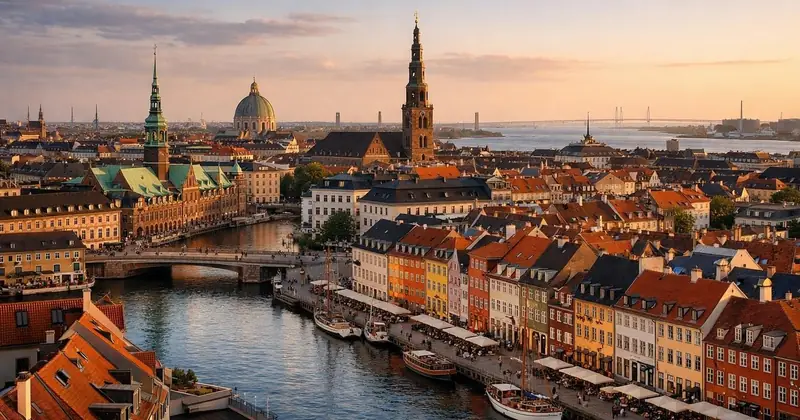 Popular
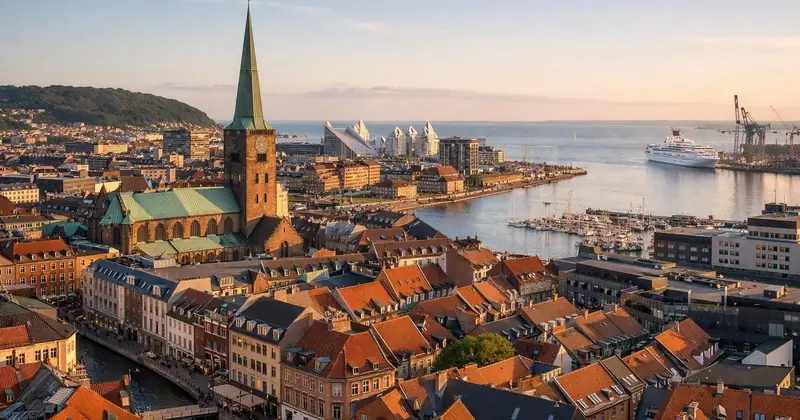 Popular
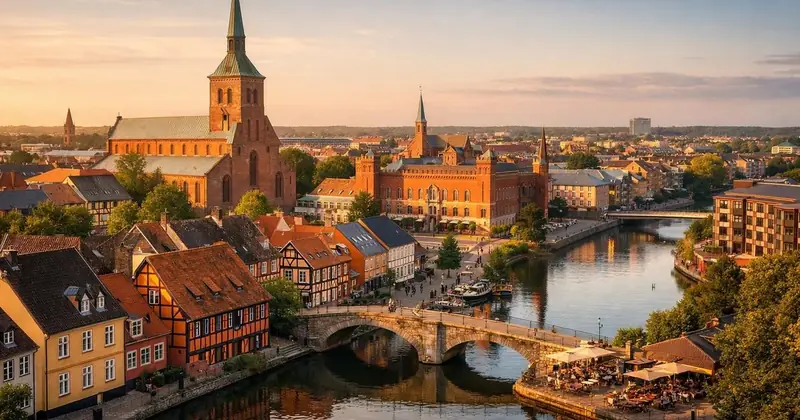 Popular
Cash payout points with addresses and opening hours
Denmark · Listed locations: 10
Open the map to see the locations.
Open Google MapsFrederiksbergsgade 28, Copenhagen, HOVEDSTADEN, 1459
Mon-Sat 08:30 - 20:15; Sun 09:30 - 17:30
Vesterbro Torv 8, Aarhus C, MIDTJYLLAND, 8000
Mon-Fri 08:00 - 18:00; Sat 08:00 - 16:00; Sun 10:00 - 16:00
Kochsgade 35 B, Odense, SYDDANMARK, 5000
Mon-Sun 09:00 - 22:00
Nytorv 27, FRIIS SHOPPINGCENTER, Aalborg, 9000
Mon-Sat 10:30 - 18:00; Sun 10:00 - 16:00
Radhuspassagen 4, Vejen, JUTLAND, 6600
Mon-Sun 09:00 - 18:00
VESTER FARIMAGSGADE 6, KOBENHAVN V, HOVEDSTADEN, 1606
Mon-Sat 09:00 - 19:00; Sun Closed
Park Alle 7, AARHUS, JULAND, 8000
Mon-Fri 08:00 - 22:00; Sat 09:00 - 22:00; Sun 10:00 - 17:00
B, KOCHSGADE 35, ODENSE, SYDDANMARK, 5000
Mon-Sun 08:00 - 23:30
NIELS EBBESENS GADE 8A, AALBORG, NORDJYLLAND, 9000
Mon-Sat 10:00 - 20:00; Sun 09:00 - 20:00
STRANDBYGADE 51, ESBJERG, SYDDANMARK, 6700
Mon-Sun 07:00 - 21:00
Directory data as of 2026-08-26
 Danske Bank
 Nykredit
 Nordea Denmark
 Jyske Bank
 Sydbank
Real stories from real people
Everything is excellent, they don't cheat, manager Emil helped out, there are delays sometimes, don't worry, my whole procedure from first message to cash payout took an hour
Read full reviewI was assisted by manager Sofa. Thanks to her for being in touch. Overall everything is great, I received the money in Nha Trang via ATM, but there was one nuance (I didn't remove a star because of it). After I transferred the money to the details there followed a long wait (a check) I probably stood by the ATM for about 40 minutes and worried that I had sent money to scammers. But they reassured me and said that such long checks happen very rarely. The main thing is the result, in the end I received the money. Overall a very convenient service when you have roubles on your card and need to get cash dong.
Read full reviewEverything is excellent, the courier arrived on time, the exchange went smoothly
Read full reviewThey worked perfectly. I received the money in Nha Trang. I messed up the cash-out myself, but operator Anna walked me through it step by step again. Operator number 648089. Thanks!
Read full reviewThe deal went quickly, delivery right to the hotel, very high customer focus from manager Stanislav, thank you!
Read full reviewYandex
I exchanged through an ATM, everything was quick and precise Operator Stas helped sort out all the questions
Read full reviewYandex
I was afraid something would go wrong, I exchanged rubles for baht in Pattaya, called a courier, everything was fast and perfect, WhatsApp support helps with any little thing. My personal manager was Alisa, thanks!
Read full reviewWhat we guarantee on every deal in Denmark
The final payout amount in DKK is known before payment and does not change.
We confirm the rate and the payout amount before payment — they do not change afterwards.
Cash, courier or bank account — at the agreed payout point.
We accept from Russia and pay out in the local currency, including USDT — no Mir card required.
No Mir card is required for this.
Pick a country and you get its rate, its cities and its payout methods.
Country not found
Yes, with ATM24 you can exchange rubles for krone: cash can be collected at an office in Russia before departure, or funds received via bank transfer in Denmark. Rate and DKK result confirmed before payment.
Denmark uses the Danish krone (DKK), not the euro. Rubles, dollars, or USDT can be exchanged for DKK via ATM24, and the final amount is confirmed in the request before payment.
Mir card in Denmark is not a reliable primary option - the banking infrastructure runs on European and international networks. Cash DKK is safer to prepare in advance through ATM24.
We don't quote a fixed figure. For a reference, check the 100 USD -> DKK calculation: 622.84 DKK.
Cash krone can be collected at an office in Russia before departure, or a bank transfer arranged in Denmark. The available route for your amount is confirmed in the request.
Did not find an answer?
Contact support